The UK is missing a trick when it comes to one of the shining jewels in its soft power crown, says Claire McColgan, Associate Director of Culture at Liverpool City Region and Director of Culture at Liverpool City Council, as she makes the case for more a more strategic approach to events influenced by the regions.
Liverpool City Region does events really brilliantly. A golden thread runs through our work, intrinsically connecting communities, culture and lived experience with moments of national and international spectacle.
Just last week, the Grand Départ of the 2027 Tour de France was confirmed, with my home city hosting the finale of stage two. It completes a unique triumvirate of major moments for our region, with The Open at Royal Birkdale this summer and UEFA EURO 2028 coming to Everton’s new stadium in July 2028. My team has been tasked with delivering the cultural programmes around all three and I know they will be brilliant events for our region and for the UK.
Of course, it’s not just the events themselves. One of the great legacies of hosting the World Boxing Championships last September, is the amount of support its driven for our grassroots clubs and the number of unsung heroes operating there which we’ve connected with.
And Liverpool has always been about more than sport. Some of our most memorable events have been those that come from the minds of artists like the giants from Royal de Luxe, Taylor Town and Eurovision in all its glittering glory …these tell the story of our city on an international and yet very human scale.
From Wimbledon and the FA Cup Final to the Grand National, the UK consistently delivers sporting events that capture global attention. We have the operational expertise, the brand reputation and the international trust to host moments that resonate far beyond our borders.
I was delighted to be invited to give evidence at last week’s DCMS inquiry into major events, and to have the opportunity to talk about how we want to do more in our region to attract, grow and develop events and to champion the role of the regions in driving a national strategy, building on the model established by UK Sport.
When cultural events succeed in the UK, they have grown organically. Our most famous festivals – Glastonbury, Edinburgh, Hay-on-Wye – are extraordinary. Someone once had the idea for Glastonbury. Someone once invented Eurovision. Those ideas grew because they were allowed to take risks, to scale and to evolve.
I believe we now have an opportunity to make step changes which will nurture the next generation of major cultural events, built for today’s audiences and tomorrow’s economy.
Across the UK, there is an enormous amount of under-recognised creativity – often grassroots, often volunteer-led, often happening outside the usual centres of power. But there is no national infrastructure to identify promising ideas, invest in producers, and help those ideas grow into events of national or international significance. Events sit squarely within the creative industries, yet we rarely talk about them as entrepreneurial ventures with growth potential which will impact on their places and beyond.
Without the right support, we’re not backing a new generation of event-makers. And without them, the UK’s cultural events landscape risks standing still.
Place matters enormously. The most powerful events are rooted in local identity, history and pride. Cunard’s Three Queens worked because it combined a global brand with Liverpool’s story. Eurovision worked because the city had the confidence, capacity and credibility to host it with warmth and care.
But place does not have to mean immobility. Some events can travel. Others can be deeply rooted but connected nationally – lighting festivals, music programmes, or heritage moments stitched together across regions. Sydney’s Vivid Festival shows what’s possible when ambition, branding and coordination align.
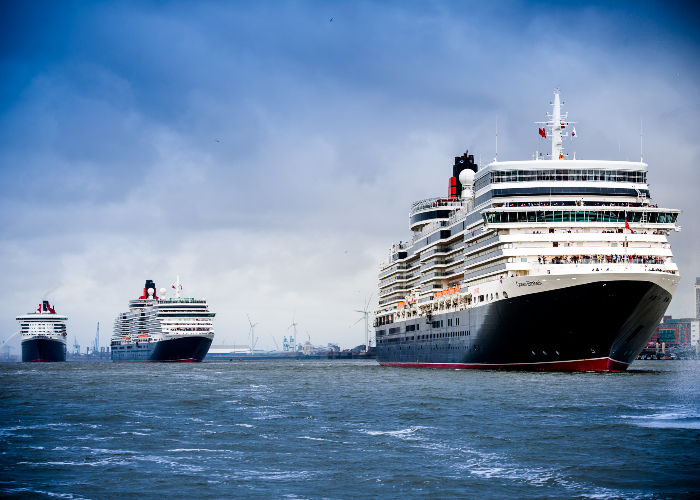
Cunard’s three cruise liners – Queen Mary 2, Queen Elizabeth, and Queen Victoria – together on the River Mersey in Liverpool to celebrate the company’s 175th anniversary.
International visitors don’t experience the UK city by city. They experience it as a whole. Our events strategy should reflect that and at the heart of the issue is a simple fact: no one is responsible for cultural events at a national strategic level. Arts funding bodies are not designed for this role, and it shows. Cultural events are often bolted on to sport, tourism, or regeneration strategies, rather than treated as serious drivers of growth, identity and soft power.
We believe the ambition for major events should be national, but that investment and programming must be place‑led — rooted in local strengths, priorities and communities. The fantastic response nationally to the UK Town of Culture competition has shown that places are ready for the challenge.
To realise the ambition of cultural devolution, this approach must be properly funded through coordinated public and private investment, convened by government and delivered in close partnership with Mayoral Combined Authorities and local authorities. Done well, it can drive cultural devolution and move us away from counter‑productive competitive bidding processes.
We know this kind of collaboration works. Eurovision 2023 in Liverpool was delivered through a strong partnership between Liverpool City Council, the BBC and DCMS. The BBC led broadcast delivery, the City Council led city programming and legacy, and DCMS provided strategic oversight and funding. This shared governance model enabled a unified approach to hosting on behalf of Ukraine, underpinned by inclusion, cultural diplomacy and robust equality frameworks — and demonstrated a new way of delivering major international events.
There are still untapped opportunities for major events to shape powerful narratives around identity, pride and place, and to drive prosperity across our regions. In Liverpool, we know events are catalytic moments, not endpoints and I have talked often about how our region could host a centre of excellence to identify new ideas, incubate talent, support scale, and coordinate experiences across the country.
Events bring people together. Events are unique collective experiences, in a world designed ever more for the individual. They also shape how places are perceived. They build confidence, pride and connection.
With tourism levies emerging and growing interest in place-based growth, there is a real opportunity to rethink how we do this – we need to support the creative thinkers and the places where the next generation of cultural events will emerge and ensure that cultural events have a serious, strategic place at the top table.