- Bricks and roof tiles from old town centre buildings are being reclaimed and repurposed in the construction of the new St Helens Transport Interchange
- This initiative is part of a broader commitment to sustainability, aiming to reduce waste and cut carbon emissions throughout the project
- The state-of-the-art facility, set to transform transport connectivity in St Helens town centre, is being delivered with £32m in funding from the Combined Authority
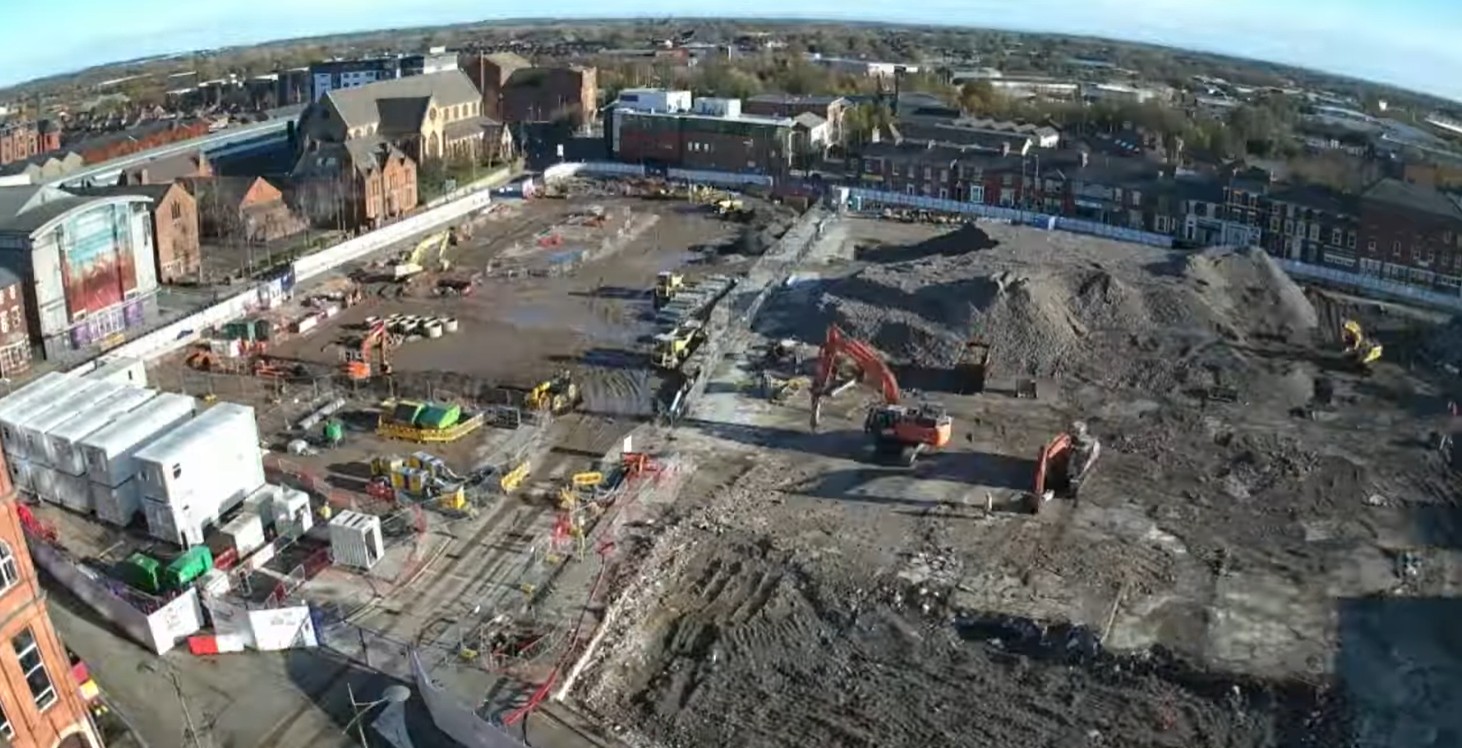
Bricks and roof tiles from demolished town centre buildings are being reclaimed and repurposed as construction progresses on the new St Helens Transport Interchange, for which planning permission was granted in July and the enabling works are already well underway.
The initiative is part of an ambitious drive to cut carbon, reduce waste and deliver a more sustainable future for St Helens.

The scheme is being delivered on behalf of Liverpool City Region Combined Authority and St Helens Borough Council and its regeneration partner ECF – a joint venture between Homes England, L&G, and Muse.
The roof tiles have been palletised and sent for crushing and recycling into a terrazzo tile – a decorative material made from a blend of materials and aggregates – which will feature in the flooring of the new buildings.
Bricks and other hardcore leftovers from the old buildings are also being reclaimed and will form part of the earthworks.
Cllr Steve Foulkes, chair of the Transport Committee at the Liverpool City Region Combined Authority said: “It’s fantastic to see sustainability being put at the forefront of St Helens Transport Interchange project. The Combined Authority is proud to support this scheme, which will not only improve transport connectivity for local communities but also demonstrates a clear commitment to innovative, eco-friendly development. This project is a fantastic example of how, working with partners, we can deliver a greener future for our city region.”
The St Helens Bus Interchange project is being supported by a £32 million investment from the Liverpool City Region Combined Authority via the City Region Sustainable Transport Settlement (CRSTS), along with £3.25 million from the UK Government’s Towns Fund and further contributions from the local authority.
The interchange is being delivered in tandem with a wider, once-in-a-lifetime regeneration strategy for the town centre. Phase One includes a new Market Hall, a 120-bedroom Hampton by Hilton hotel, 56 apartments, eight townhouses and more than 4,000 square feet of modern retail space. All of this will sit within expansive, biodiversity-rich green spaces designed to support pollinators, encourage native planting, and improve climate resilience.
Councillor Richard McCauley, Cabinet Member for Regeneration at St Helens Borough Council, emphasised the importance of recycling in the town’s regeneration. “Materials salvaged from the demolition of former buildings have an important role to play and are a key part of our sustainability strategy that is centred on achieving net-zero carbon by 2040,” he said. “The new Transport Interchange will incorporate low carbon materials wherever possible, and our commitment will extend into its future operation, aided by solar panels, green roofs and a new fleet of buses.”
Martin Horton, of VINCI Building, said: “Everyone on the project team is deeply committed to recycling, and we’re proud to reuse materials wherever possible. At VINCI Building, we’re actively promoting a circular economy – reclaiming elements like the former pub and transforming them into terrazzo tiling and hardcore for reuse in the exciting new bus station.”
He added: “Demolition is a careful, systematic process that allows us to safely deconstruct and retain valuable materials. These efforts are significantly reducing the carbon footprint of the new build and minimising its overall environmental impact. As a business, we remain committed to sustainable development – cutting greenhouse gas emissions, reducing resource consumption, and fostering a positive impact on biodiversity and natural environments.”
Matt Whiteley, Senior Project Manager at English Cities Fund, said: “Reclaiming and reusing materials makes a valuable contribution to our sustainability goals across the entire town centre regeneration project. We are targeting 96% – 98% by weight and volume for the recycling and reuse of the existing materials. We can achieve this by using planned demolition methods to ensure that reusable materials are maintained in good condition. We are just the beginning of a transformation that will deliver not only a new Transport Interchange, but a series of attractive new buildings set amid high-quality public spaces. With trees, plants and wildlife thoughtfully integrated into the design, the project will deliver a Biodiversity Net Gain of over 1,000%, helping to reshape St Helens town centre as a greener, more welcoming place.”
The wider transformation of St Helens town centre is underpinned by a £69.2 million funding package from St Helens Borough Council, with additional support from the UK Government and ECF. This includes two Town Deal grants totalling £10.49 million, as well as £812,000 from the One Public Estate Brownfield Land Release Fund to enable sustainable residential development.
This work forms part of a 20-year regeneration partnership between the council and ECF, with the first phase focused on breathing new life into the town centres of St Helens and Earlestown – restoring their roles as vibrant, thriving places at the heart of local life.