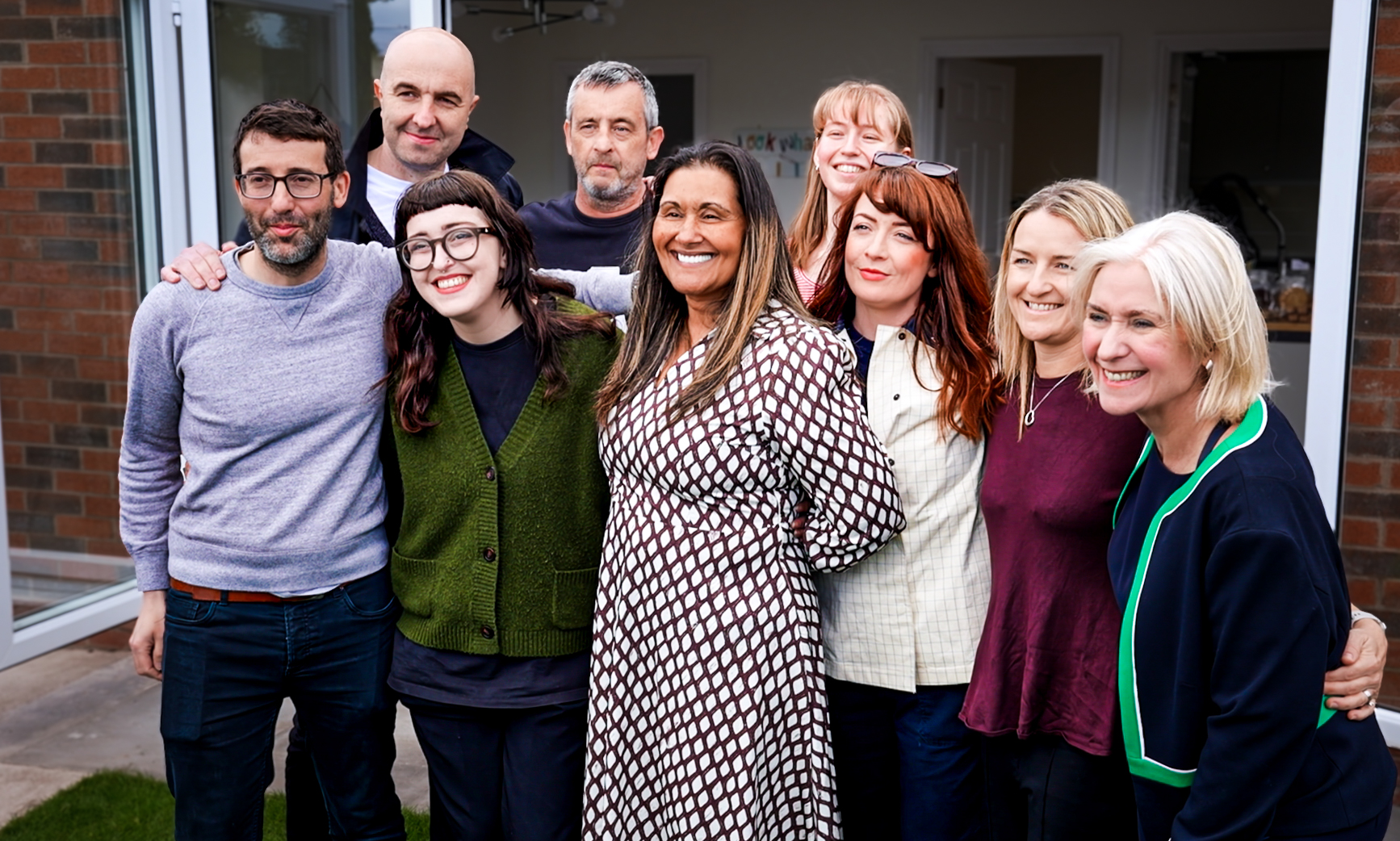
 Sophie Clarke, third from the right, with the Juno team, launching the latest home.
At a recent “housewarming” event to launch Juno’s newest children’s home, in Runcorn, Managing Director Sophie Clarke invoked a familiar idea: it takes a village to raise a child.
For children growing up in stable families, this means school friends, neighbours, role models and a sense of belonging.
But under the current residential care system, many children lose this as they are uprooted and placed many miles away from their communities. Studies show that without that stability, prospects suffer – across education, health, employment and wellbeing.
In response, Juno was launched to keep children local, while employing people with lived experience of care homes to help design a system that will bring joy and hope.
And Juno introduced a simple but powerful shift in thinking.
Sophie explains:
“In 2020, our work looking at outcomes for children in care showed that lots of young people from the city region were living miles away from the people that they loved and cared about.
“Juno really is born out of the question – how do we deliver really high-quality care that gives children happy and healthy childhoods and adult lives?
“From this, we developed a not-for-profit model which is keeping more children local and close to the people that they care about. For us, it’s really about quality and reinvesting in children and our staff.
“Children are often removed from their families because they’ve had to experience extremely difficult things, so there’s a big responsibility for us just to make sure that they get a childhood. Our job is to look after them, and that has to focus on joy.”
This emphasis on joy, stability and belonging sits at the heart of a new approach to residential care taking shape across the Liverpool City Region that is quietly challenging a system driven by market forces.
Across England, 84% of children’s homes are privately run, with councils often competing on an open market for available placements. The result is a system where around 45% of children in care are placed outside their local authority area, and more than one in five are more than 20 miles from home.
For the City Region, where local and national private providers run nearly 90% of homes, that challenge is even more acute. In places like Halton, only a small proportion of residential placements are within the borough and one in five children are placed more than 20 miles from home.
So, four years ago, We are Juno CIC was launched with a £2.2m investment: £1m from Wirral Council, £800,000 from the Combined Authority’s Strategic Investment Fund and £400,000 from social investors.
Three homes followed, in Oxton, Wallasey and New Brighton, all given the Good Provider rating by Ofsted. The latest home is one of four planned in Halton. It was developed by Halton Borough Council, Plus Dane Housing, We Are Juno and a local building firm all working together.
The principle is simple: remove profiteering from the equation, and the focus shifts entirely to quality. This means offering children, who may arrive after experiencing trauma, more than just a safe place – but something they might have missed: a normal, joyful childhood.
Inside Juno’s first home in Oxton, opened in 2023, that philosophy is clearly visible in the smallest details.
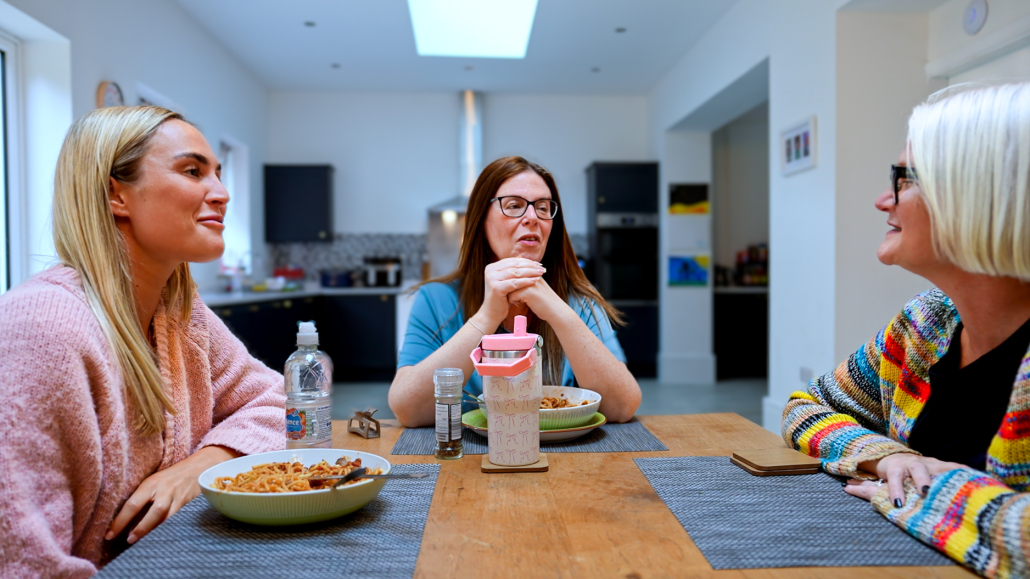
Nina Howarth, right, with staff.
Registered Manager Nina Howarth says:
“It’s all about keeping children local. We provide a really caring and nurturing environment – so anything that you would get in a regular home, a regular family, it’s exactly the same.
“We’re also really focused on making sure that kids get to be kids. That might mean trips out, shared meals, or simply time spent playing games together. Two of the children that live here at the moment love chess. We’re always encouraging them to just have fun. It’s about making living here as positive and as joyful as it possibly can be.”
Crucially, the model is shaped and guided by people who have experienced the care system themselves. That perspective helps ensure that care is not just well-intentioned, but meaningful.
Sherrie Austin, one of Juno’s Experts by Experience, says:
“Our role is to make sure that the child’s point of view and the lived experience of people within the care system is taken into account when we’re making decisions about the care that we give.
“It often takes just one person to believe in a care-experienced person, and then they’ll go on to do great things. For example, we have a ‘dare to dream’ plan in place now, so that when children turn 18, they can travel the world, or if they want to go to university and then take a gap year, they can do that.
“The point is to make sure that things are going the way that we want them to go, and that we’re not forgetting about the people at the heart of it. And I think it’s a beautiful way to work.”
For Nina, working in Oxton is tough but hugely rewarding. And the success of the model is often revealed in small but powerful changes in the children.
“It’s a difficult job, it’s a stressful job, it’s a hard job,” she says. “But when you see a child who’s been let down so many times begin to trust people, that’s everything. When that turns around… when a child who wouldn’t let you close to them comes up and asks for a hug – it’s seeing the change. That’s why I love it so much.”
 With official figures showing that 18% of care-experienced young people achieve GCSE targets, compared to 65% of their peers, and around half experiencing mental health conditions, Juno’s approach is already attracting the attention of government.
Josh MacAlister, Minister for Children and Families, praised Juno’s ‘local focus and not-for-profit funding model’ during a visit in February 2026 as part of his plans to reform the care market. He is leading a programme of reform focused on earlier intervention, stronger family support, and improvements in fostering and SEND.
As part of this, new Regional Care Cooperatives are being tested, including a pilot in Greater Manchester bringing 10 local authorities together. An expression of interest for a similar model has been submitted to government for the six Liverpool City Region councils, along with Cheshire and Warrington.
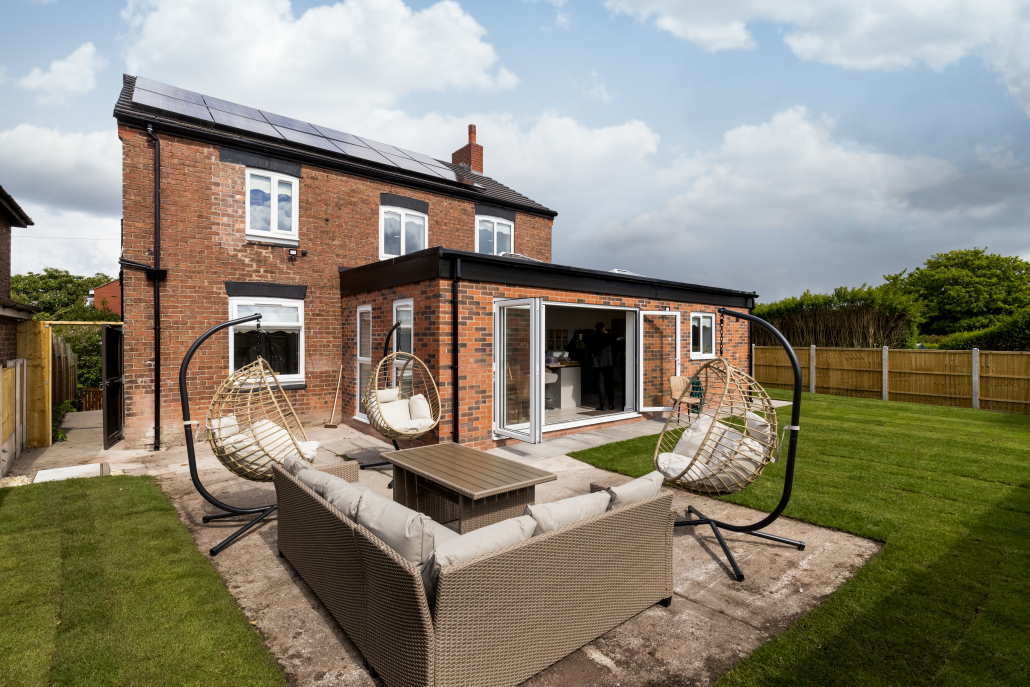
Juno, Runcorn
At its core, the Juno approach is simple: rebuilding the “village” that children in care so often lose, brick by brick, through thoughtful planning, strong relationships, stability and trust.
It puts joy before profit and gives some of the region’s most vulnerable young people the childhoods they deserve.
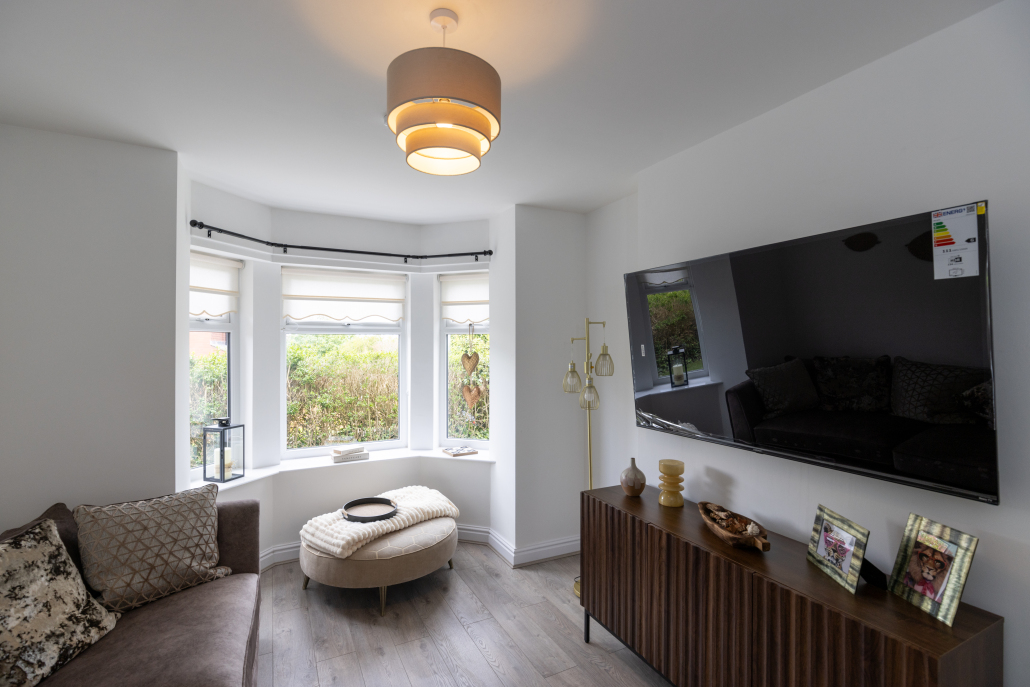
The Runcorn home – purpose-built, with three en-suite rooms and dedicated activity space, prioritising local children and rooted in lived experience – is exactly the kind of provision that our children deserve.