- £750,000 from LCR Freeport Innovation Challenge Fund
- Supporting freight and maritime decarbonisation and digitalisation of trade and logistics
- £750,000 from LCR Freeport Skills Infrastructure Grant
- Supporting training for logistics, maritime, advanced manufacturing and green energy
Hi-tech sails designed to bring wind power back into commercial shipping and a new carbon capture and storage process are among nine projects to receive £1.5m from two new Liverpool City Region Freeport funds.
Each worth £750,000, the LCR Freeport Innovation Challenge Fund and LCR Freeport Skills Infrastructure Grant are designed to deliver the Freeport’s objectives for growth, decarbonisation and inclusive employment.
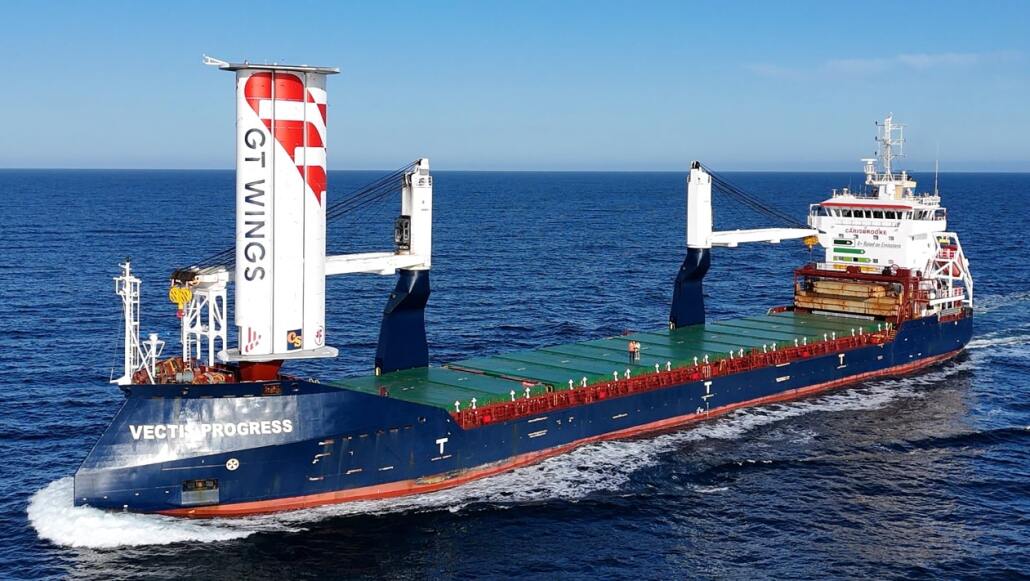
GT Technologies’ AirWing in action on the Vectris Progress cargo ship.
Cllr Liam Robinson, Liverpool City Region Cabinet Member for Innovation, said:
“Innovation is at the heart of the Liverpool City Region’s future success. These projects show how our Freeport can be a launchpad for pioneering technologies – from clean shipping solutions to carbon capture and digital logistics. By backing local innovators, we’re not only helping them scale their ideas but also positioning our region as a leader in the industries of tomorrow.”
The LCR Freeport Skills Infrastructure Grant is designed to support further education and help independent training providers to enhance the delivery of training aligned to the Freeport’s priority sectors, including logistics, advanced manufacturing, maritime and green energy, opening access to new high-value jobs.
The LCR Freeport Innovation Challenge Fund focuses on accelerating research, development and deployment of innovative technologies related to freight and maritime decarbonisation, as well as the digitalisation of trade and logistics. The Fund was delivered in partnership with Mersey Maritime, the industry body for the maritime sector in the Liverpool City Region, to ensure its alignment with the priorities of the regional maritime industry.
Mersey Maritime Chief Executive Ruth Wood said:
“Mersey Maritime is committed to tackling the sector’s key priorities: innovation, digitalisation, and developing future skills. The LCR Freeport Innovation Challenge Fund offers a significant opportunity with real financial backing, to accelerate this agenda. “That’s why we were eager to support this initiative, which empowers businesses driving practical change in maritime.
“Our industry is central to unlocking new technologies, boosting economic growth, and helping the region and the UK meet decarbonisation goals. We believe the Innovation Challenge Fund will be pivotal in turning ideas into action through successful project delivery. Across our extensive maritime ecosystem, innovators are working hard to meet the challenges of transformation.
“Mersey Maritime’s renewed focus this year through our Navigating Maritime Innovation in the LCR project has revealed a wealth of opportunities aligned with this fund’s ambitions. We look forward to seeing the outcomes, from pioneering wind propulsion systems and CO₂ capture infrastructure to advanced sensor networks, digital freight analytics, and maximising 5G at the port. Each project will make a tangible impact.
“Congratulations to all the successful businesses, your work will shape the future of maritime.”
GT Green Technologies Ltd will receive £150,000 from the Challenge Fund to invest in composite tooling to scale production of a ‘Jet Sail’ wind propulsion system called ‘AirWing’ which can cut fuel use and emissions from cargo ships by up to 30%.
Stanlow Terminals will receive £250,000 for its CO₂ Non-Pipeline Transfer (NPT) Import Terminal linked to early-stage infrastructure design to enable import, storage and onward transport of captured carbon dioxide at Stanlow and Tranmere.
Liverpool John Moores University and Peel Ports have also received funding from the LCR Freeport Innovation Challenge Fund.
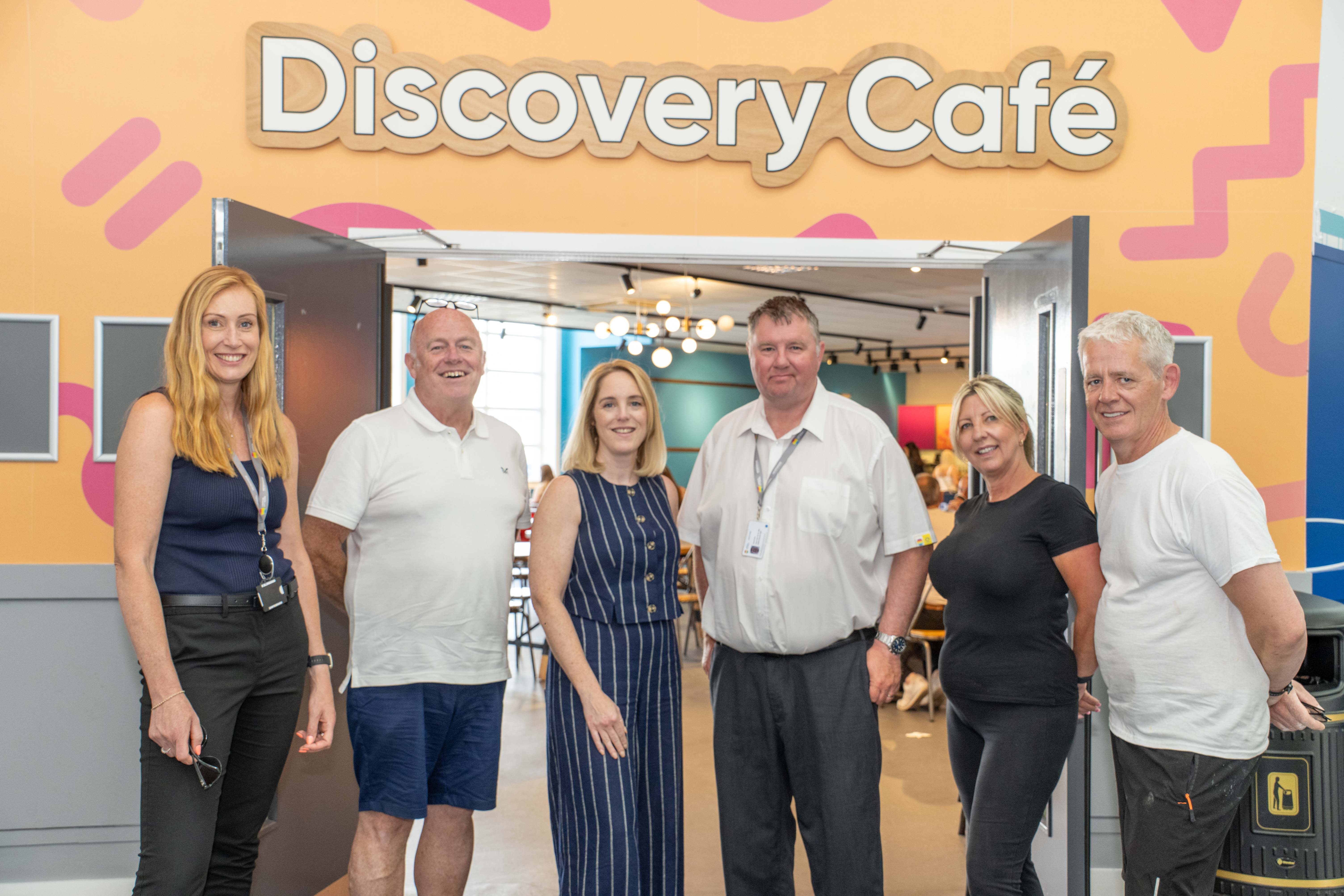
Hugh Baird College is one of five recipients of funding through the LCR Freeport Skills Infrastructure Grant, and will use £135,000 for a Freight Simulation Suite, creating a digital logistics training hub. The hub will replicate freight forwarding, customs and multimodal operations using real-time simulation software and emissions modelling tools.
The University of Liverpool, Riverside College, St. Helens College and the Wirral Met College also received LCR Freeport Skills Infrastructure Grant funding.
Liverpool City Region Freeport is one of only eight freeports in England. After working in partnership with ports, businesses, local authorities, trade unions and wider stakeholders, its Full Business Case was approved by the UK Government in December 2022.
The LCR Freeport is a designated area covering 45km, where a range of economic incentives are available, covering customs, business rates, planning, regeneration, innovation, trade and investment support. Local councils are able to retain 100% of business rates growth generated by the freeport tax sites – located in Birkenhead, St Helens and Widnes.
Centred on a mix of infrastructure including the deep-water container terminal at the Port of Liverpool – the UK’s biggest western facing port, which already handles 45% of trade from the US – the Freeport is the key coastal access point to the UK’s largest concentration of manufacturing.